
Power without the noise.
Polaris Enhanced Linear Regulators (ELRs) pair a linear regulator with patented photovoltaic-output optocouplers, blending the low noise and small footprint of a linear design with efficiency and functionality previously only attainable with switchers.
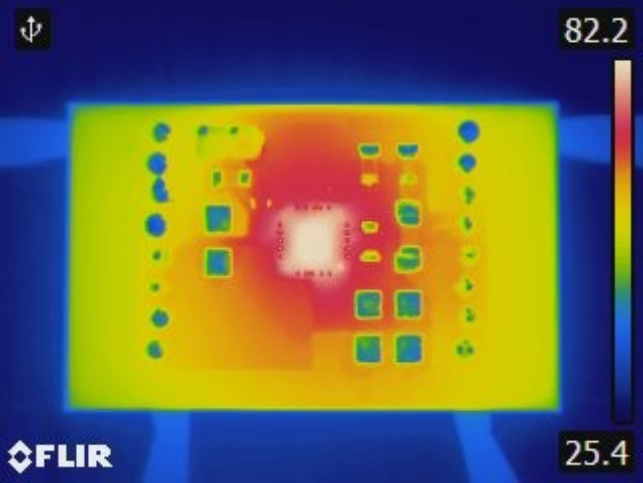
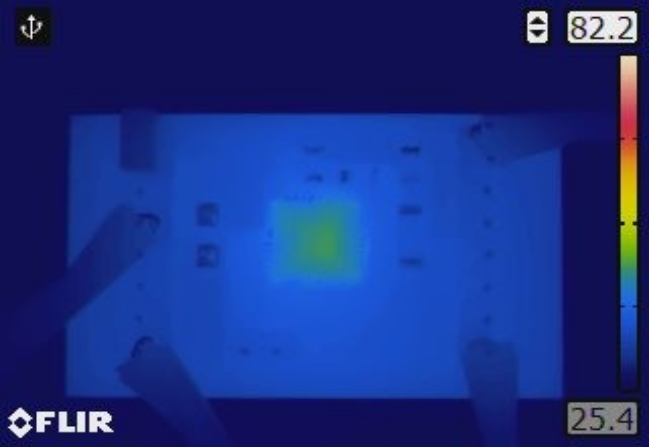
Size. Efficiency. Noise. For decades, you could pick two.
Switchers are efficient but generate noise. Linear regulators are quiet but waste excess voltage as heat. The Enhanced Linear Regulator ends the trade.
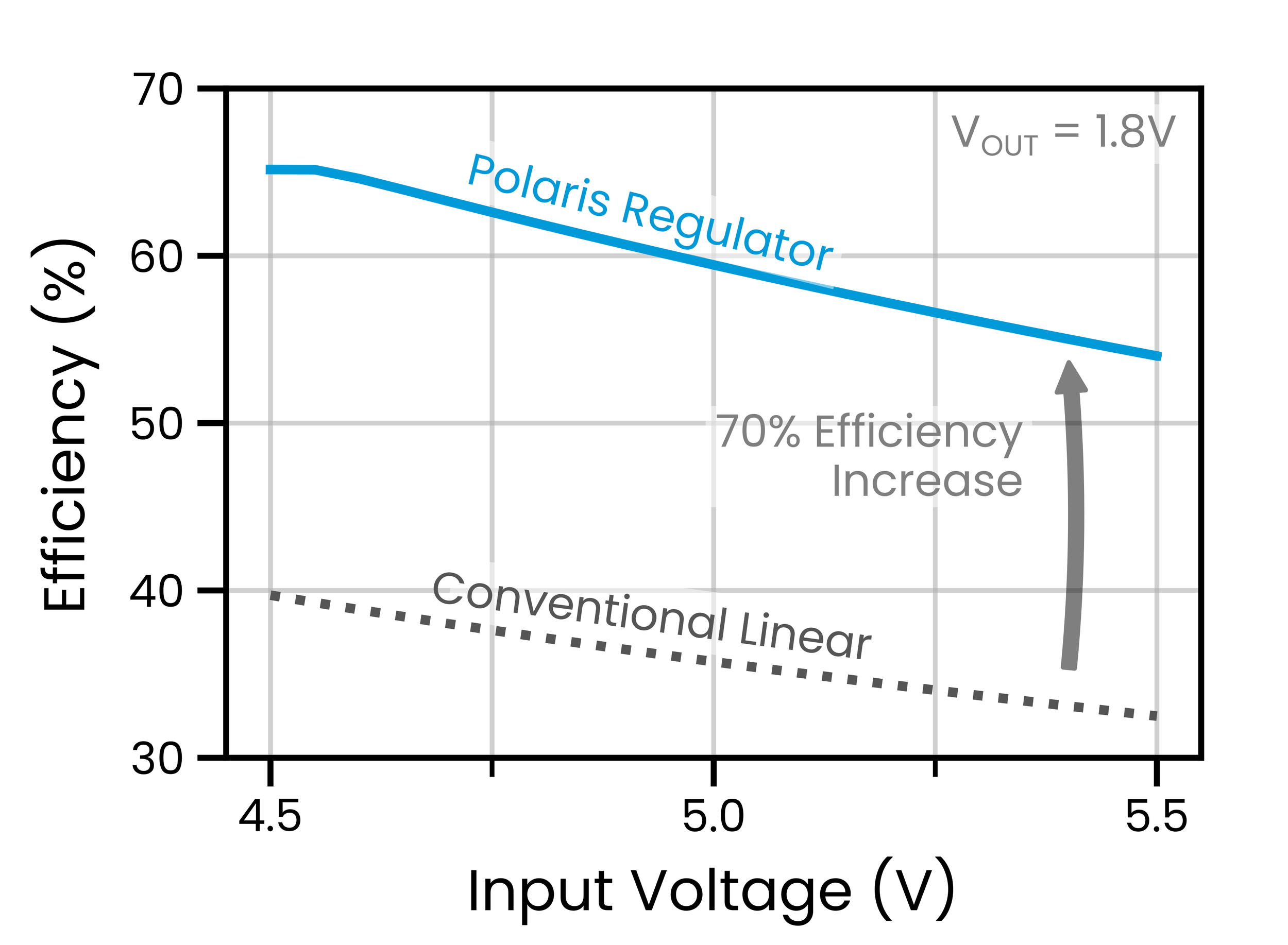
The LDO ceiling, broken
Typically 1.2× to >2× the efficiency of a conventional linear regulator, depending on voltage step — less heat, lower current draw, simpler thermal design.
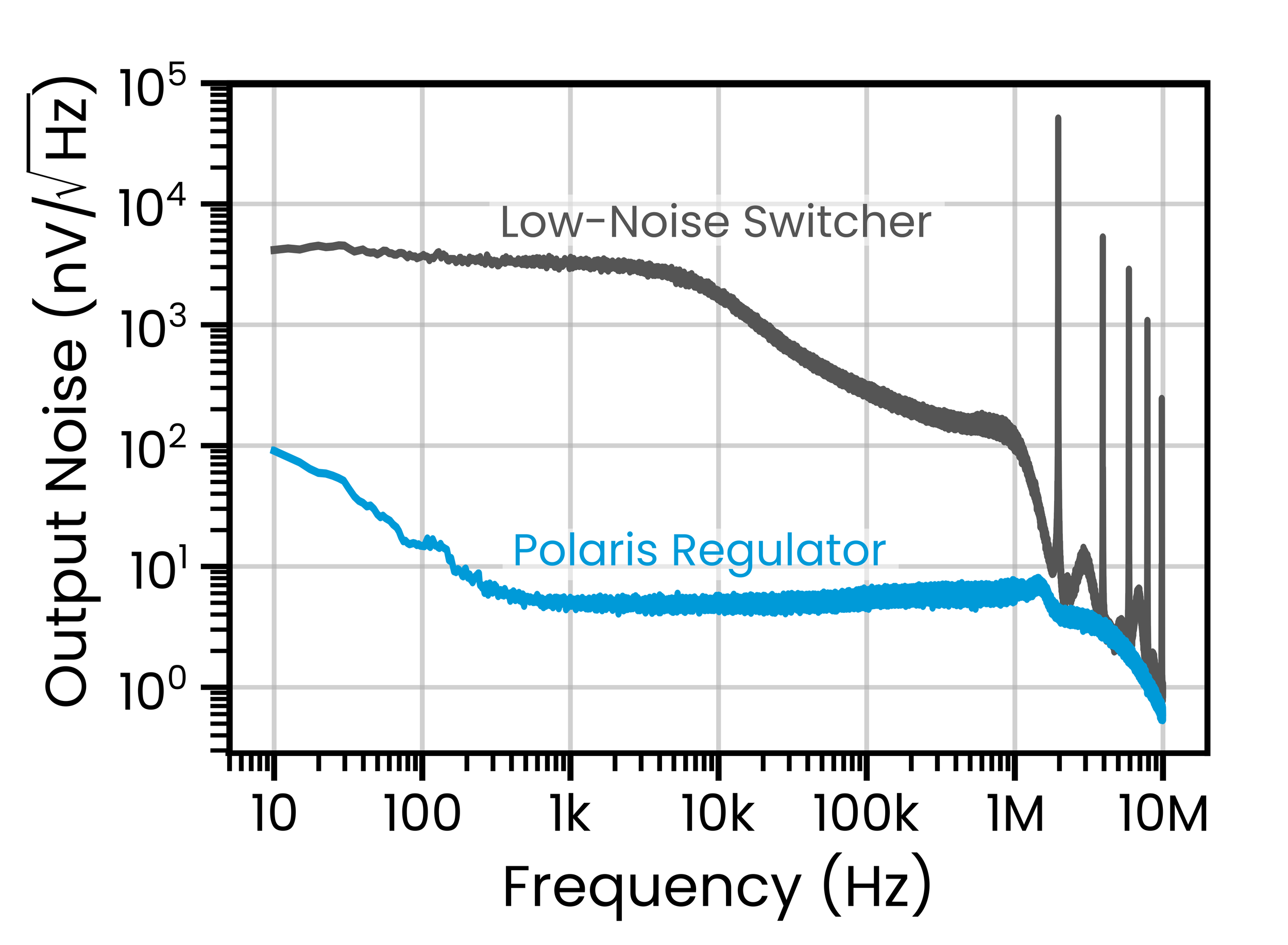
A linear noise floor
Clean, ripple-free output matching the best available LDOs — down to <1 µV RMS and >120 dB PSRR on the BK30 series. Zero switching EMI, by construction.
No inductors, minimal BoM
Compact QFN packages (36–49 mm², 0.8 mm profile) with a handful of small passives. No switching means no noise filtering and no radiated EMI design risks.
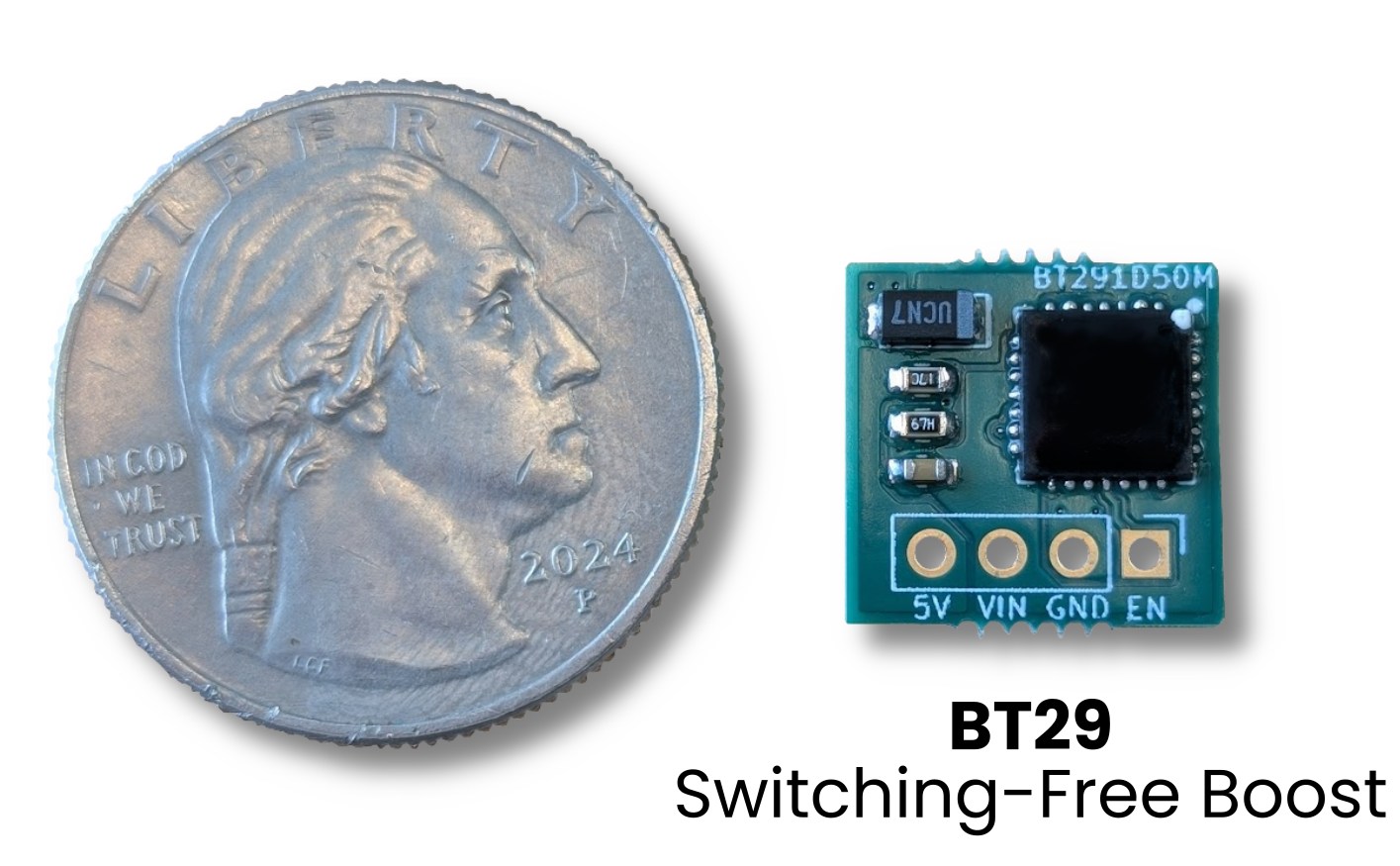
Find your regulator
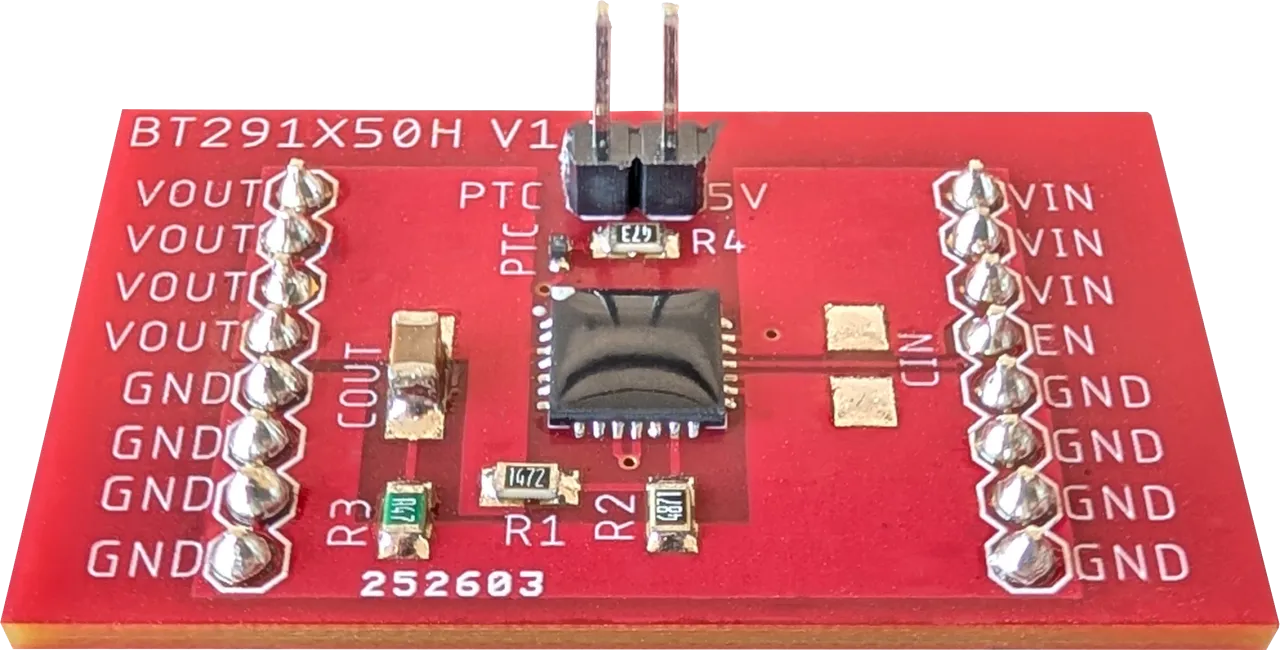
Pick by current, by noise floor, or by radiation rating. Evaluation boards are available for every part; datasheets and SPICE models on request.
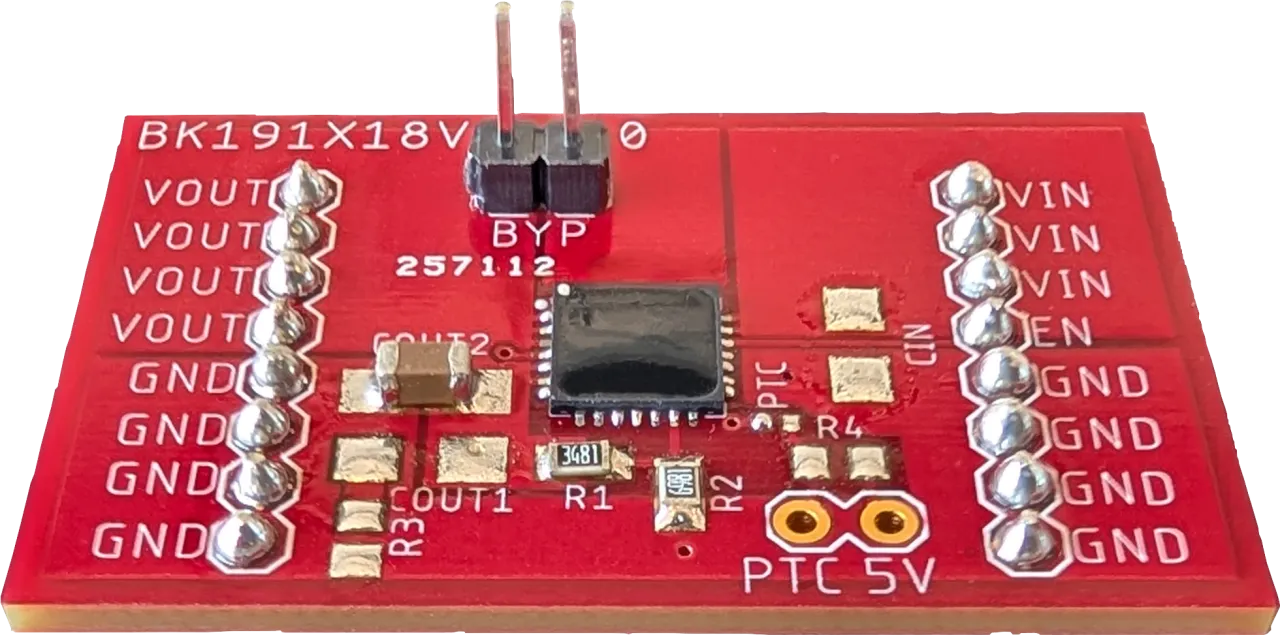
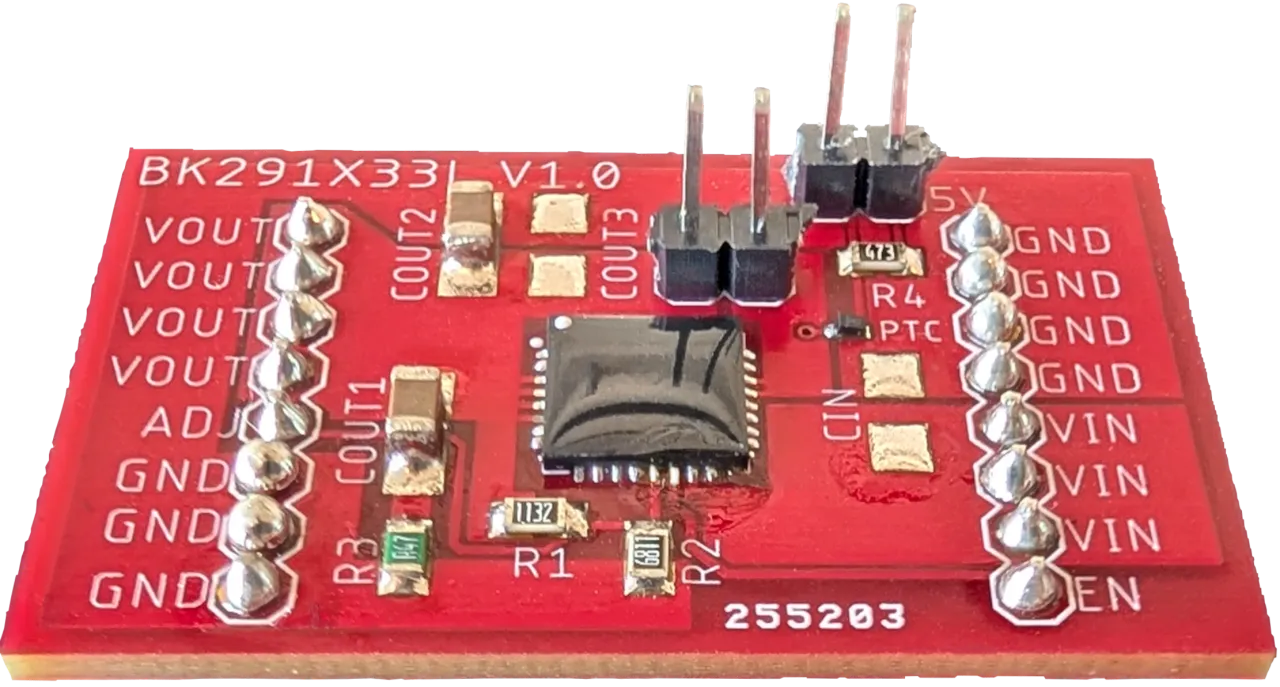
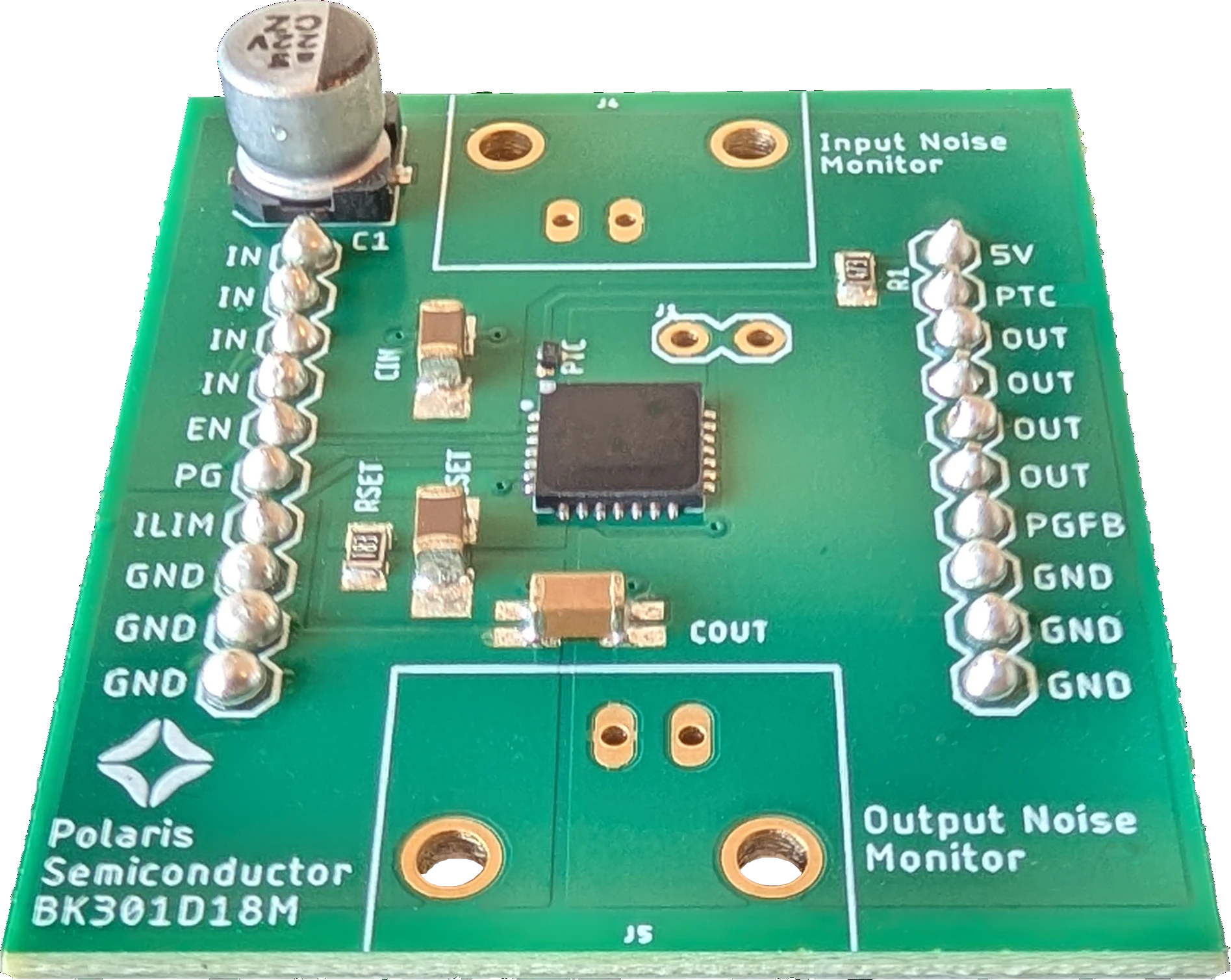
Tried and tested in space.
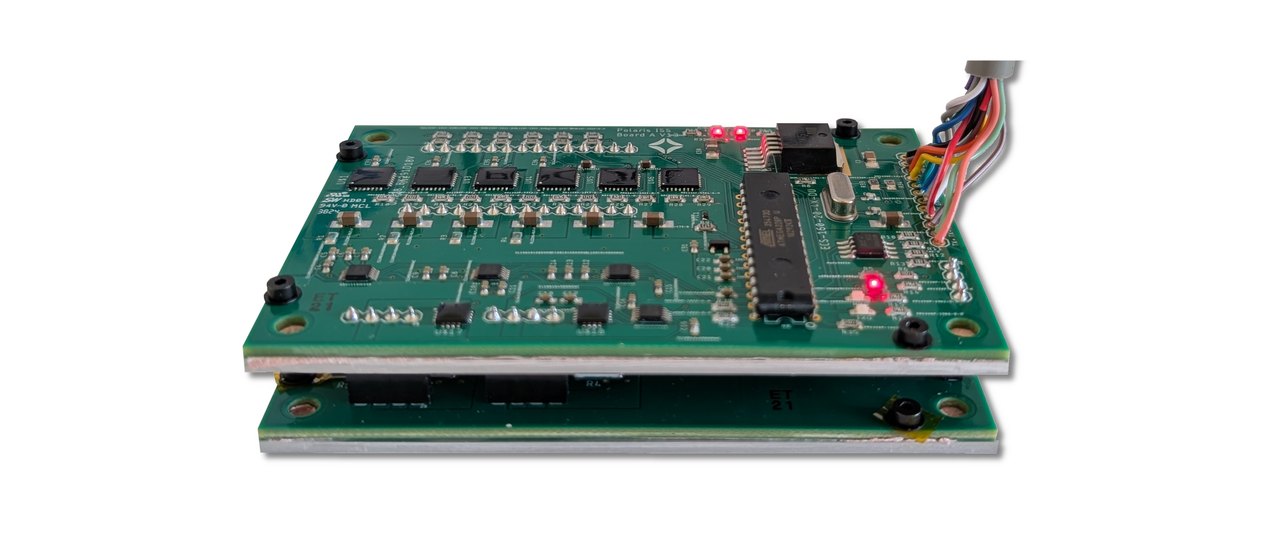
Polaris Enhanced Linear Regulators launched to the International Space Station aboard JAXA's HTV-X1 in October 2025 on the Aegis Aerospace MISSE-21 platform. The qualification experiment ran continuously for six months from January 8, 2026 — amassing more than 4,000 hours of telemetry data — with devices performing as expected against a ground-control twin in Alexandria, VA.
Next: Polaris has been selected for the ISS National Lab's 2026 Orbital Edge Accelerator, putting the ultra-low-noise BK30 family on the path to its own flight heritage.
Sponsored and supported by ISS National Laboratory · Space Development Agency · AFWERX · Air Force Research Laboratory · VIPC · JAXA · Aegis Aerospace
Photons do the heavy lifting
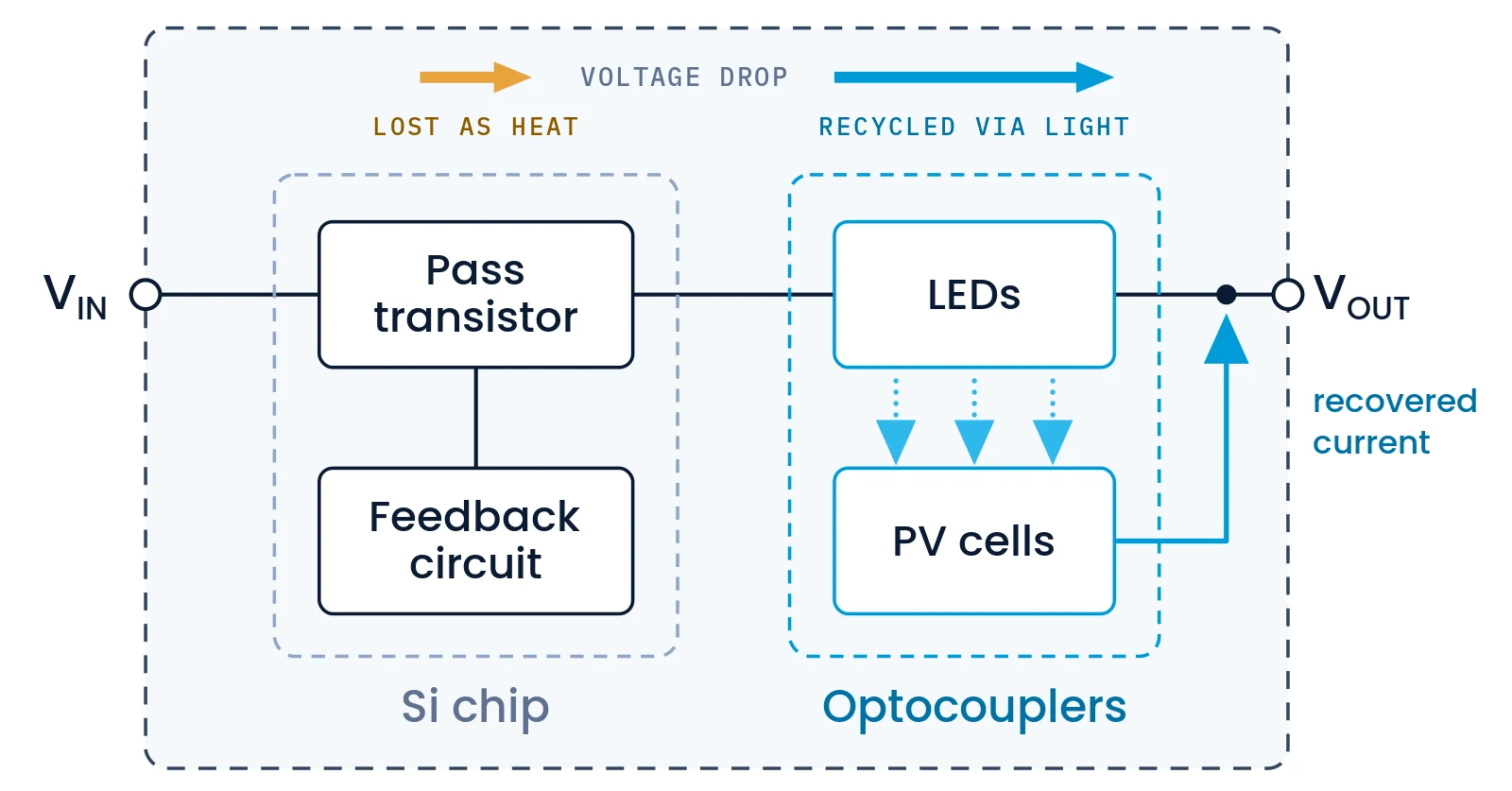
Inside every ELR, a silicon LDO is co-packaged with Polaris's proprietary optocouplers — each a single monolithic GaAs chip integrating the LED and photovoltaic cell. The optocoupler converts electrical power into light and back at over 52% efficiency, recycling energy that a conventional regulator would dissipate as heat. The same mechanism steps voltage up: the world's first efficient switching-free boost regulator.
Built on trusted foundations — RH1965, MIC29152, and LT3045 regulator cores — and protected by three granted U.S. patents.
Latest from Polaris
Polaris Semiconductor, PMI, and Ohio State Publish Microwave Journal Feature on Switching-Free Power for RF Circuits
The September 2026 technical feature documents a PMI voltage-variable attenuator design-in of the Polaris BK300D50E Enhanced Linear Regulator: regulator-induced artifacts eliminated and dynamic range improved by more than 30 dB, at near-switching-level efficiency and with a smaller power bill of materials.
Polaris Semiconductor Selected for the ISS National Lab's 2026 Orbital Edge Accelerator
Polaris joins the Sentinel Track of the 2026 Orbital Edge Accelerator, backed by investment partners Stellar Ventures, Context Ventures, and CIRI. Through the program, Polaris will work toward a planned on-orbit demonstration of its ultra-low-noise BK30 regulator family through the ISS National Lab.
Polaris Semiconductor Named a Winner of the U.S. Army's xTech|Phantum Competition
The Army selected Polaris in the Photonics topic area for a concept on uncooled GaSb-based photodiodes for free-space optical communications at 2.2–2.5 µm. The award carries a $20,000 prize and eligibility to submit a Phase I Army SBIR proposal.
Enhanced Linear Regulators, in seven questions
What is an Enhanced Linear Regulator (ELR)?
When should I use a Polaris regulator instead of a conventional LDO or a switching regulator?
How efficient are Polaris voltage regulators?
Are Polaris regulators radiation hardened?
What radiation and reliability testing has Polaris completed?
Have Polaris regulators flown in space?
Do Polaris regulators require inductors?
Ready to design it in?
Request evaluation samples, detailed datasheets, and SPICE models — an engineer answers, not a sales funnel.